HRV and Sleep: What Your Heart Rate Variability Actually Tells You About Recovery
Heart rate variability (HRV) measures your nervous system's recovery state. Higher HRV typically indicates better sleep quality and readiness, while declining HRV suggests you need more rest.
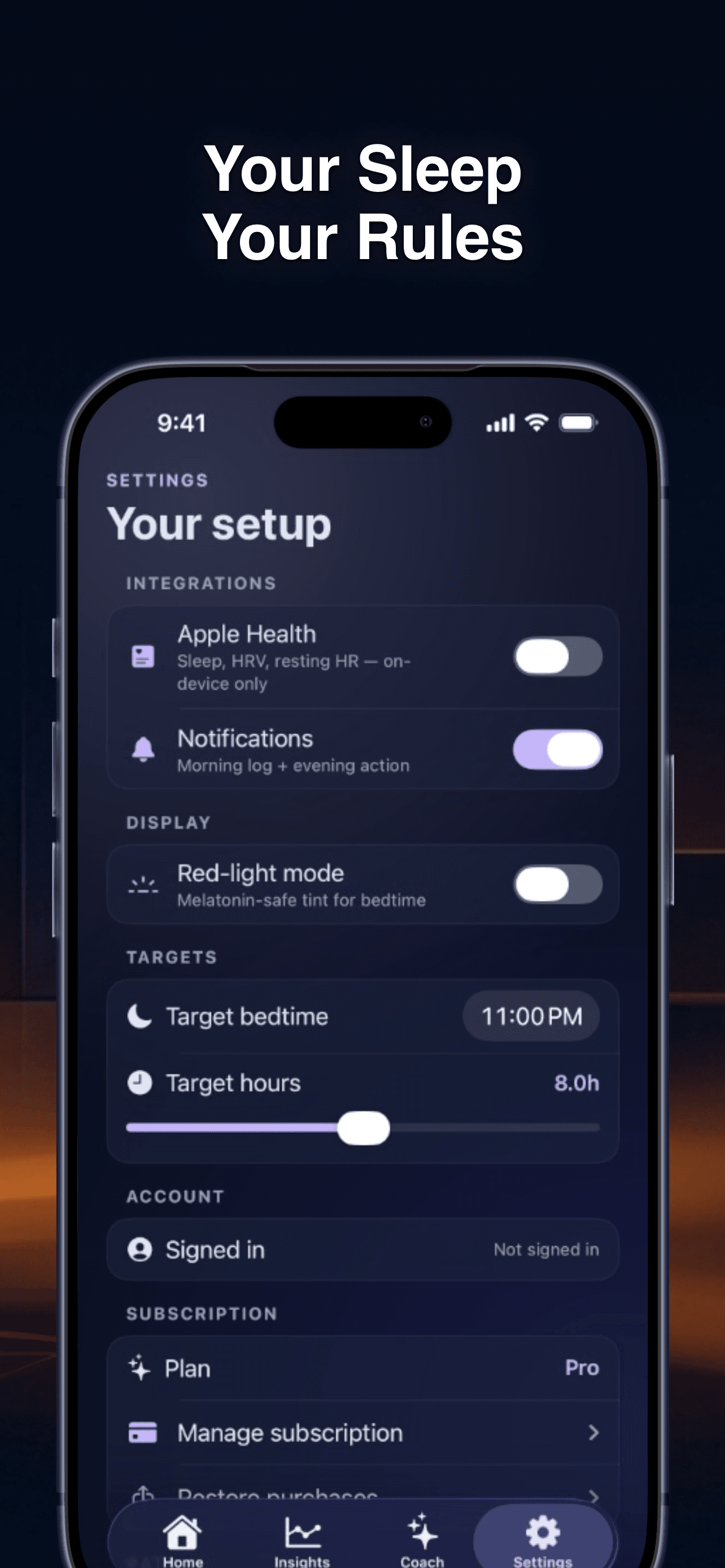
Photo by Sleep Arc.
Your Apple Watch buzzes at 6 AM. You check your HRV: 42 ms. Yesterday it was 51 ms. Should you worry? Skip your workout? Go back to bed?
Heart rate variability (HRV) measures the time differences between consecutive heartbeats, reflecting your autonomic nervous system's balance. Higher HRV typically indicates better recovery and sleep quality, while consistently low or declining HRV suggests your body needs more rest. This metric has become a cornerstone of sleep and recovery tracking, but most people misunderstand what their numbers actually mean.
What HRV Actually Measures
HRV isn't measuring how fast your heart beats. It's measuring how much your heart rate varies from beat to beat. A healthy nervous system constantly adjusts your heart rate based on breathing, stress, and recovery needs. More variation means better adaptability.
Your parasympathetic nervous system (rest and digest) increases HRV. Your sympathetic nervous system (fight or flight) decreases it. During quality sleep, parasympathetic activity dominates, leading to higher HRV readings.
The key insight: HRV reflects your nervous system's readiness to handle stress, not just cardiovascular fitness.
How Sleep Quality Affects Your HRV
Poor sleep consistently lowers HRV through several mechanisms:
Sleep fragmentation reduces parasympathetic recovery time. Each awakening triggers a brief sympathetic response, cutting into your nervous system's restoration period.
Insufficient deep sleep limits the parasympathetic dominance needed for HRV recovery. Deep sleep is when your nervous system does its heaviest recovery work.
Sleep debt accumulation creates a chronic stress response. Your body interprets sleep deprivation as a threat, maintaining higher sympathetic tone even during rest.
Research shows that people with sleep disorders like sleep apnea have significantly lower HRV compared to healthy sleepers, even when other health factors are controlled.
Reading Your HRV Trends Correctly
Single-day HRV readings mean almost nothing. Your baseline varies based on age, fitness, genetics, and measurement timing. A 25-year-old athlete might have an HRV of 80 ms, while a healthy 50-year-old might average 35 ms. Both are normal.
Focus on these patterns instead:
- 7-day rolling average: Smooths out daily noise
- Trend direction: Is your average rising or falling over weeks?
- Recovery after stress: Does your HRV bounce back after poor sleep or high stress days?
- Consistency: Wild daily swings often indicate poor recovery or measurement errors
I track my HRV through Apple Health, and I've learned that my baseline drops about 8-10 ms when I get less than 7 hours of sleep for two consecutive nights. The pattern is more valuable than any single number.
Why Your HRV Drops After Bad Sleep
Sleep deprivation triggers a cascade of physiological stress responses that directly impact HRV:
Elevated cortisol from sleep debt keeps your sympathetic nervous system activated. Cortisol should drop at night and rise in the morning, but sleep loss flattens this rhythm.
Increased inflammation from inadequate recovery creates systemic stress. Your immune system works harder, requiring more sympathetic nervous system activity.
Reduced heart rate variability during sleep means less overnight recovery. Quality sleep should show high HRV periods, especially during deep sleep phases.
Impaired glucose regulation from sleep loss creates metabolic stress that your nervous system must manage.
Common HRV Tracking Mistakes
Most people make these errors when interpreting their HRV data:
Comparing absolute numbers to others: Your HRV baseline is individual. A "low" number for someone else might be normal for you.
Panicking over single low readings: Stress, alcohol, late meals, or measurement timing can cause temporary drops.
Ignoring measurement consistency: HRV varies significantly based on when and how you measure. Stick to the same time and conditions.
Overriding clear body signals: If you feel great but your HRV is slightly low, trust how you feel. The metric should inform, not override, your subjective experience.
Using HRV to Improve Sleep Decisions
HRV works best as a sleep optimization tool when you track trends alongside sleep quality metrics:
Low HRV + poor subjective sleep quality: Prioritize earlier bedtime and better sleep hygiene tonight.
Normal HRV + good sleep: You're recovering well. Maintain current habits.
Declining HRV trend over several days: Look for patterns. Are you going to bed later? Drinking more caffeine? Experiencing more stress?
HRV recovery after protocol changes: If you adjust your bedtime or sleep environment, HRV trends can show whether the change is working.
The most actionable approach is connecting HRV patterns to specific sleep behaviors. When my HRV drops below my 7-day average for three consecutive days, I know I need to prioritize sleep over other activities.
HRV Integration with Sleep Tracking Apps
Modern sleep apps like Sleep Arc can integrate HRV data from Apple Health to provide more nuanced coaching. Instead of generic sleep advice, the AI coach can factor in your HRV trends when recommending tonight's action.
For example, if your HRV has been declining while your sleep duration looks adequate, the coach might suggest focusing on sleep quality factors like room temperature or caffeine timing rather than just going to bed earlier.
This integration makes HRV data actionable rather than just informational. The key is having a system that translates your biometric trends into specific, implementable changes.
What to Do Tonight
If you're tracking HRV, check your 7-day trend tonight. If it's declining or below your personal baseline, prioritize one sleep quality factor: an earlier bedtime, cooler room temperature, or skipping that late coffee. HRV responds to consistent sleep habits more than perfect single nights.
The goal isn't chasing higher numbers. It's using HRV trends to make better sleep decisions that compound over time.
Frequently asked questions
- What is a good HRV score for sleep recovery?
- There's no universal 'good' HRV score. Your personal baseline matters more than absolute numbers. Focus on maintaining your 7-day average and watching for declining trends rather than comparing to others.
- How quickly does HRV respond to better sleep?
- HRV typically responds to sleep changes within 2-3 days, but establishing a new baseline can take 1-2 weeks of consistent sleep habits. Single good nights may not immediately raise HRV.
- Can I improve my HRV without changing my sleep schedule?
- Sleep quality often matters more than duration for HRV. Improving sleep environment, reducing alcohol, managing stress, and maintaining consistent bedtimes can boost HRV even with the same sleep hours.
- Why does my Apple Watch HRV vary so much day to day?
- Daily HRV fluctuations are normal due to stress, meal timing, alcohol, exercise, and measurement conditions. Focus on weekly trends rather than daily variations for meaningful insights.
- Should I skip workouts when my HRV is low?
- Consider your overall trend and how you feel. A single low HRV reading doesn't necessarily mean you need rest, but consistently declining HRV combined with fatigue suggests prioritizing recovery.