HRV and Sleep: What Your Heart Rate Variability Actually Tells You About Recovery
Heart Rate Variability (HRV) reflects your nervous system's recovery state. Higher HRV typically indicates better sleep quality and readiness, while declining HRV suggests stress or poor recovery.
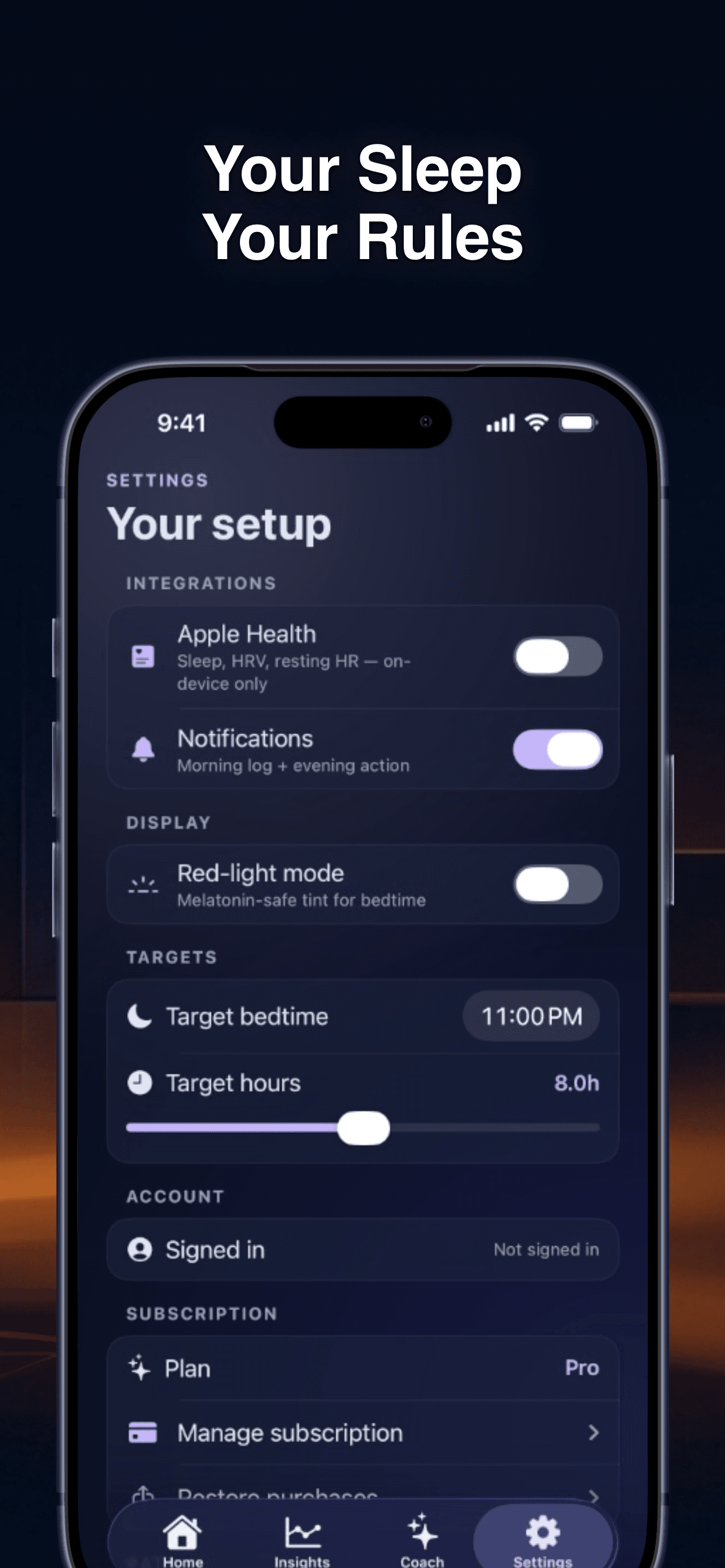
Photo by Sleep Arc.
Your Apple Watch buzzes. You check the sleep app and see a new metric: HRV. The number sits there, cryptic as hieroglyphics. 42 ms. Is that good? Bad? Should you panic or celebrate?
Heart Rate Variability measures the tiny fluctuations in time between your heartbeats. When your parasympathetic nervous system (rest-and-digest mode) dominates, these intervals vary more. When your sympathetic system (fight-or-flight) takes over, your heart beats more mechanically. Higher HRV typically signals better recovery and sleep quality. Lower HRV often indicates stress, overtraining, or poor sleep.
The key word is "typically." HRV isn't a magic number that solves sleep optimization. But it's a useful signal when you understand what drives it.
How HRV Connects to Sleep Quality
Your HRV fluctuates throughout the night in predictable patterns. During deep sleep stages, your parasympathetic system dominates and HRV peaks. During REM sleep, when your brain is highly active, HRV drops as your sympathetic system engages.
A good night's sleep produces higher morning HRV readings. Poor sleep—whether from alcohol, late caffeine, stress, or environmental disruptions—typically depresses next-day HRV. The effect isn't immediate. Your lowest HRV often appears 1-2 days after the sleep disruption.
Research from the European Journal of Applied Physiology found that sleep-deprived athletes showed 15-20% lower HRV for up to 48 hours after a single night of poor sleep. The nervous system needs time to recalibrate.
This delayed response makes HRV useful for spotting patterns you might miss otherwise. Your subjective energy might feel fine after one bad night, but your HRV reveals the hidden recovery debt.
What Affects Your HRV Numbers
Several factors influence your HRV beyond sleep quality:
- Alcohol consumption: Even moderate drinking can suppress HRV for 2-3 days
- Training intensity: Hard workouts lower HRV as your body recovers
- Stress levels: Work deadlines, relationship conflicts, and financial pressure all register
- Illness: Your HRV often drops before you feel sick symptoms
- Age: HRV naturally declines with age, so focus on your personal trends
- Hydration: Dehydration can reduce HRV by 10-15%
The most actionable insight comes from tracking your personal baseline over 2-4 weeks, then watching for significant deviations.
How to Read Your HRV Trends
Raw HRV numbers mean little without context. A 25-year-old athlete might have a baseline HRV of 60 ms, while a 45-year-old desk worker sits at 30 ms. Both can be perfectly healthy.
Focus on these patterns instead:
Weekly averages: Day-to-day HRV swings wildly. Look at 7-day rolling averages to spot meaningful changes.
Percentage changes: A drop from 40 ms to 32 ms (20% decline) signals more concern than a drop from 60 ms to 56 ms (7% decline).
Recovery trends: After a stressful period or poor sleep streak, healthy HRV should rebound within 3-5 days with good sleep habits.
Morning consistency: Take HRV readings at the same time each morning, ideally within 30 minutes of waking, before coffee or exercise.
I track HRV through my Apple Watch and notice clear patterns. After international travel, my HRV drops 25-30% for a week. During high-stress work periods, it gradually declines over days. But the most reliable HRV killer? Late-night alcohol. Even two drinks at 9 PM consistently drops my next-day HRV by 15%.
When HRV Suggests Sleep Problems
Certain HRV patterns indicate sleep issues worth investigating:
Consistently declining baseline: If your 7-day average drops 20% over a month without obvious cause, examine your sleep environment, stress levels, and recovery habits.
No overnight recovery: Healthy HRV should show some rebound after 1-2 nights of good sleep. If it stays suppressed despite better sleep habits, consider underlying health issues.
Extreme daily swings: HRV that varies 40-50% day-to-day suggests inconsistent sleep timing or chronic stress.
Plateau during recovery: After illness or high stress, HRV should gradually return to baseline. A plateau might indicate incomplete recovery or ongoing sleep debt.
Using HRV to Optimize Your Sleep
HRV works best as a recovery gauge, not a daily report card. Here's how to use it practically:
Adjust training intensity: If HRV drops significantly, prioritize sleep over intense exercise that day.
Time your recovery: When HRV stays low for 3+ days, focus extra attention on sleep hygiene—earlier bedtime, cooler room, no screens before bed.
Test interventions: Try a new sleep habit (magnesium, meditation, different bedtime) and watch how HRV responds over 1-2 weeks.
Identify hidden stressors: Unexplained HRV drops often reveal stress you hadn't consciously noticed.
HRV Limitations and Reality Checks
HRV isn't a perfect sleep metric. Several limitations keep it from being the ultimate sleep score:
Individual variation: Some people naturally have low HRV but sleep perfectly. Others have high HRV despite poor recovery.
Measurement inconsistency: Chest straps provide more accurate HRV than wrist-based devices, but most people won't wear chest straps nightly.
Lag effects: HRV reflects yesterday's or the day before's sleep more than last night's.
Overemphasis risk: Obsessing over daily HRV numbers can create anxiety that ironically lowers HRV.
The Sleep Foundation notes that HRV should complement, not replace, how you actually feel. If your HRV looks great but you feel exhausted, trust your body.
Integrating HRV with Sleep Coaching
Modern sleep apps like Sleep Arc can incorporate HRV data from Apple Health to provide more nuanced coaching. Instead of generic advice, the AI coach can recognize when your HRV suggests incomplete recovery and adjust recommendations accordingly.
For example, if your HRV has declined 20% over three days, the coach might prioritize stress-reduction techniques over sleep timing changes. If HRV rebounds quickly after better sleep, it might focus on maintaining those successful habits.
This integration transforms HRV from a confusing number into actionable sleep guidance. The key is having a system that interprets HRV trends alongside your subjective sleep quality, daily habits, and life context.
Your HRV tells a story about recovery, but you need the right translator to understand what it's saying. Track it consistently, focus on trends over daily numbers, and use it as one signal among many for optimizing your sleep.
Frequently asked questions
- What is a good HRV score for sleep?
- HRV varies greatly by individual, age, and fitness level. Focus on your personal baseline over 2-4 weeks rather than absolute numbers. A healthy pattern shows consistent overnight recovery and gradual improvement with good sleep habits.
- How accurate is Apple Watch HRV for sleep tracking?
- Apple Watch HRV is reasonably accurate for tracking trends, though chest straps provide more precise measurements. The key is consistent measurement timing and focusing on weekly patterns rather than daily fluctuations.
- Why does my HRV drop after drinking alcohol?
- Alcohol suppresses parasympathetic nervous system activity and disrupts sleep architecture. Even moderate drinking can lower HRV by 15-20% for 2-3 days as your body processes the alcohol and recovers.
- Should I change my sleep habits based on daily HRV readings?
- No, daily HRV swings are normal. Look at 7-day averages and significant trends. If HRV drops 20%+ for several days, prioritize recovery sleep habits, but don't overreact to single-day changes.
- Can stress affect HRV even with good sleep?
- Yes, psychological stress, physical training, illness, and dehydration all impact HRV independently of sleep quality. HRV reflects overall nervous system recovery, not just sleep effectiveness.