HRV and Sleep: What Your Heart Rate Variability Actually Tells You
Heart rate variability (HRV) reflects your nervous system's recovery state. Higher HRV typically indicates better sleep quality and readiness, while low HRV suggests stress or poor recovery.
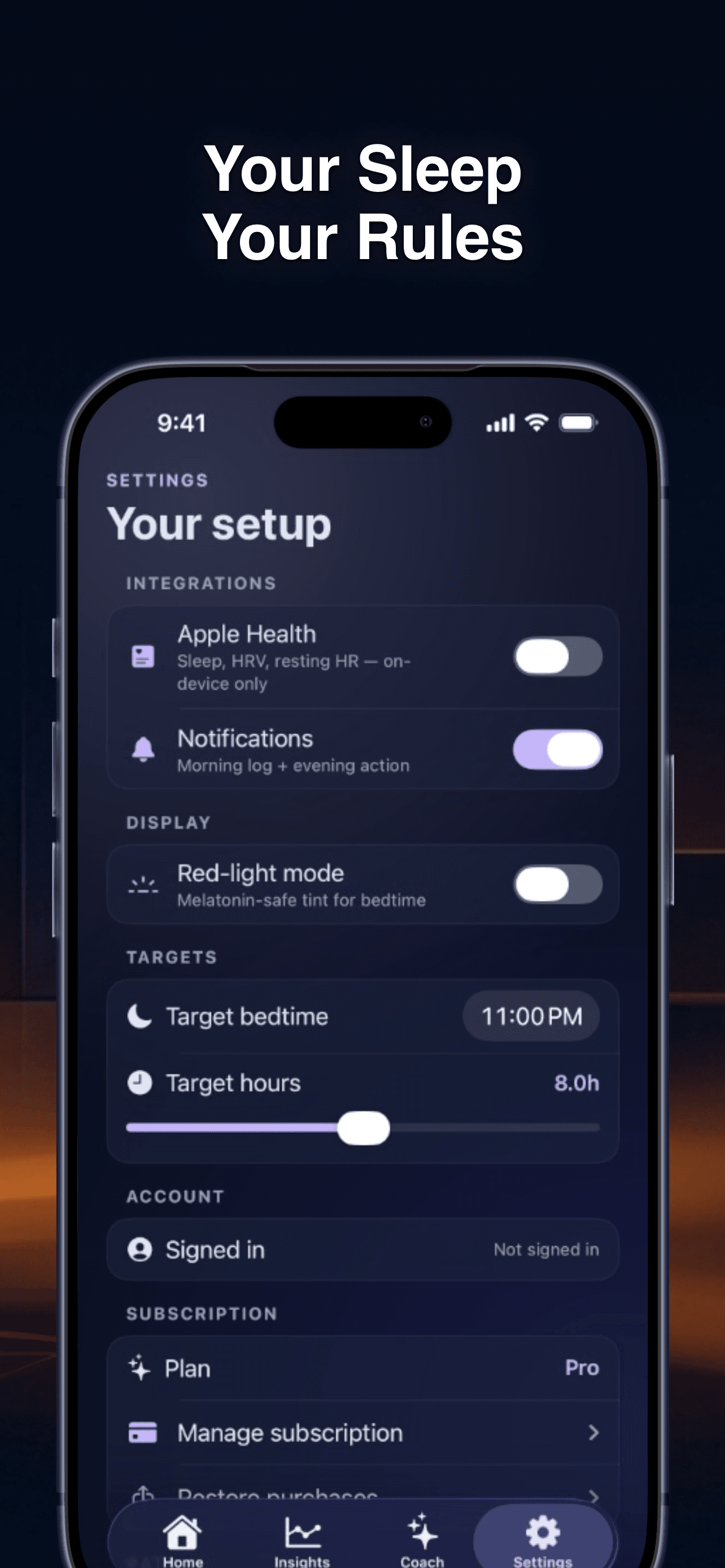
Photo by Sleep Arc.
Your Apple Watch buzzes. You check the sleep app. Last night's HRV: 32ms. Yesterday it was 45ms. What does this actually mean for your sleep?
Heart rate variability (HRV) measures the time variation between heartbeats, reflecting your autonomic nervous system's balance. Higher HRV typically indicates better recovery and sleep readiness, while consistently low HRV suggests stress, overtraining, or poor sleep quality. Most healthy adults see HRV values between 20-60ms, but your personal baseline matters more than comparing to others.
The relationship between HRV and sleep works both ways. Poor sleep tanks your HRV the next day. Low HRV before bed often predicts restless sleep ahead.
How HRV Connects to Sleep Quality
Your heart doesn't beat like a metronome. The variation between beats reflects two branches of your nervous system: sympathetic (fight-or-flight) and parasympathetic (rest-and-digest). When you're well-rested and recovered, these systems dance together smoothly, creating higher variability.
Sleep deprivation shifts this balance. After a poor night, your sympathetic system stays elevated. Heart rate becomes more rigid. HRV drops.
Research from the Sleep Research Society shows that people with consistently higher HRV report:
- 23% better sleep efficiency
- Fewer night wakings
- More time in deep sleep stages
- Faster sleep onset
The mechanism makes sense. Higher HRV indicates your parasympathetic system is active—the same system that promotes sleep onset and maintains deep sleep stages.
What Your HRV Numbers Actually Mean
HRV measurements vary wildly between people. A 25-year-old athlete might average 60ms. A 50-year-old with good fitness might see 35ms. Both could be perfectly healthy.
Your personal trends matter more than absolute numbers:
- Rising trend over weeks: Better recovery, improved sleep habits
- Stable baseline: Good consistency in sleep and stress management
- Declining trend: Potential overtraining, chronic stress, or sleep debt
- Daily volatility: Normal, but extreme swings (20+ ms) often correlate with sleep disruption
Most people see their highest HRV during deep sleep phases, typically in the first half of the night. This is when parasympathetic activity peaks.
The Apple Watch HRV Reality Check
Apple Watch measures HRV during sleep using photoplethysmography—light sensors detecting blood volume changes. It's convenient but has limitations.
The watch calculates RMSSD (root mean square of successive differences), focusing on short-term variability. This method works well for trends but can miss nuances that chest-strap monitors capture.
Accuracy factors:
- Wrist position: Loose bands reduce accuracy
- Movement: Restless sleep creates artifacts
- Skin tone: Darker skin sometimes affects optical readings
- Tattoos: Can interfere with light sensors
For sleep optimization, Apple Watch HRV is useful for spotting patterns, not precise measurements. Focus on weekly trends, not daily fluctuations.
How to Use HRV for Better Sleep
Track your personal baseline for 2-3 weeks. Note your average and typical range. Then watch for patterns.
High HRV days: Your body recovered well. Consider why:
- Earlier bedtime the night before?
- Less caffeine or alcohol?
- Lower stress levels?
- Consistent sleep schedule?
Low HRV mornings: Something disrupted recovery:
- Late dinner or alcohol consumption
- High stress or anxiety
- Room too warm or noisy
- Inconsistent sleep timing
I've noticed my HRV drops 15-20% after nights when I eat within three hours of bedtime, even if I sleep the same duration.
Common HRV and Sleep Mistakes
Chasing higher numbers: HRV optimization isn't about maximizing the metric. Extremely high HRV can indicate overtraining recovery or medication effects.
Ignoring context: Illness, travel, and life stress naturally lower HRV. Don't panic over temporary dips.
Daily obsessing: HRV fluctuates normally. Weekly averages provide clearer signals than daily readings.
Comparing to others: Your 30ms might represent better recovery than someone else's 50ms, depending on age, fitness, and genetics.
Actionable HRV-Sleep Strategies
When HRV trends downward over several days:
- Prioritize sleep consistency: Same bedtime and wake time, even on weekends
- Reduce evening stimulation: Dim lights, avoid intense exercise 3+ hours before bed
- Check your environment: Cool (65-68°F), dark, quiet room
- Monitor caffeine timing: Cut off 8-10 hours before bedtime
- Manage evening stress: Brief meditation or journaling before bed
When HRV is consistently high, you're likely recovering well. Don't fix what isn't broken, but note what's working in your routine.
Integrating HRV with Sleep Coaching
HRV works best as one data point among several, not a standalone metric. Sleep duration, efficiency, and subjective quality ratings provide context that raw HRV can't capture.
Sleep Arc integrates Apple Health HRV data with your nightly sleep logs to identify patterns between your recovery metrics and sleep habits. The AI coach can spot correlations you might miss—like how your Tuesday evening routine consistently improves Wednesday morning HRV.
This integration helps translate HRV data into specific, actionable changes for tonight's sleep, rather than leaving you staring at numbers wondering what to do next.
The most effective approach combines objective metrics like HRV with your subjective experience. Your body knows when it's recovered, even if the numbers look different than expected.
Frequently asked questions
- What is a good HRV for sleep?
- HRV varies greatly between individuals. Focus on your personal baseline rather than comparing to others. Most healthy adults see 20-60ms, but consistent trends matter more than absolute numbers.
- How accurate is Apple Watch HRV for sleep tracking?
- Apple Watch HRV is useful for tracking trends but less precise than chest-strap monitors. It's accurate enough to identify patterns between sleep quality and recovery over time.
- Why is my HRV lower after poor sleep?
- Poor sleep elevates your sympathetic nervous system, making heart rate more rigid and reducing variability. This reflects your body's stressed state and reduced recovery capacity.
- Should I change my sleep routine based on daily HRV readings?
- No, focus on weekly trends rather than daily fluctuations. HRV naturally varies day-to-day. Look for patterns over 7-14 days before adjusting your sleep habits.
- Can improving sleep increase HRV?
- Yes, consistent quality sleep typically improves HRV over time by supporting better autonomic nervous system balance and recovery. Focus on sleep consistency, duration, and environment.