The Sleep Arc Blog
Sleep, decoded. One honest lever at a time.
Research-backed writing on sleep quality, HRV, wind-down routines, and the behavioral levers that actually move your score — from the team building Sleep Arc.
HRV and Sleep: What Your Heart Rate Variability Actually Tells You About Recovery
Heart Rate Variability (HRV) reflects your nervous system's recovery state. Higher HRV typically indicates better sleep quality and readiness, while declining HRV suggests stress or poor recovery.
More from the blog
HRV and Sleep: What Your Heart Rate Variability Actually Tells You
Heart rate variability (HRV) reflects your nervous system's recovery state. Higher HRV typically indicates better sleep quality and readiness, while low HRV suggests stress or poor recovery.
HRV and Sleep: What Your Heart Rate Variability Actually Tells You About Recovery
Heart rate variability (HRV) measures your nervous system's recovery state. Higher HRV typically indicates better sleep quality and readiness, while declining HRV suggests you need more rest.
HRV and Sleep: What Your Heart Rate Variability Actually Tells You
Heart rate variability (HRV) reflects your autonomic nervous system's recovery state. Higher HRV typically indicates better sleep quality and recovery, while declining HRV suggests stress or poor sleep.
HRV and Sleep: What Your Heart Rate Variability Actually Tells You
Heart rate variability (HRV) measures your nervous system's recovery state. Higher HRV typically indicates better sleep readiness, while low HRV suggests you need more recovery time.
HRV and Sleep: What Your Heart Rate Variability Actually Tells You
Heart rate variability (HRV) reflects your nervous system's recovery state. Higher HRV typically indicates better sleep recovery, while declining HRV suggests stress or poor sleep quality.
HRV and Sleep: What Your Heart Rate Variability Actually Tells You
Heart rate variability (HRV) reflects your autonomic nervous system balance and sleep recovery. Higher HRV typically indicates better recovery, while declining trends may signal overtraining or stress.
HRV and Sleep: What Your Heart Rate Variability Actually Tells You
Heart Rate Variability (HRV) measures your nervous system's recovery state. Higher HRV typically indicates better sleep quality and readiness, while lower HRV suggests stress or incomplete recovery.
HRV and Sleep: What Your Heart Rate Variability Actually Tells You
Heart rate variability (HRV) reflects your autonomic nervous system's balance and correlates with sleep quality. Higher HRV typically indicates better recovery and readiness for sleep.
HRV and Sleep: What Your Heart Rate Variability Actually Tells You
Heart rate variability (HRV) reflects your nervous system's recovery state and correlates with sleep quality. Higher HRV typically indicates better recovery, but individual baselines matter more than absolute numbers.
When to Stop Drinking Caffeine for Better Sleep: The 6-Hour Rule
Stop drinking caffeine 6 hours before bedtime to avoid sleep disruption. Caffeine's 5-6 hour half-life means afternoon coffee can still affect your sleep quality at night.
HRV and Sleep: What Your Heart Rate Variability Actually Tells You
Heart rate variability (HRV) measures your autonomic nervous system's recovery. Higher overnight HRV typically indicates better sleep quality and readiness for the next day.
HRV and Sleep: What Your Heart Rate Variability Actually Tells You About Recovery
Heart rate variability (HRV) measures your nervous system's recovery status. Higher HRV typically indicates better sleep quality and readiness, but individual patterns matter more than absolute numbers.
Why Your Sleep Score Keeps Dropping (and the One Habit That Usually Fixes It)
If your sleep score looks great one night and tanks the next, you're not imagining it. Here's the single behavioral lever that moves the needle for most people — and how to spot it in your own data.
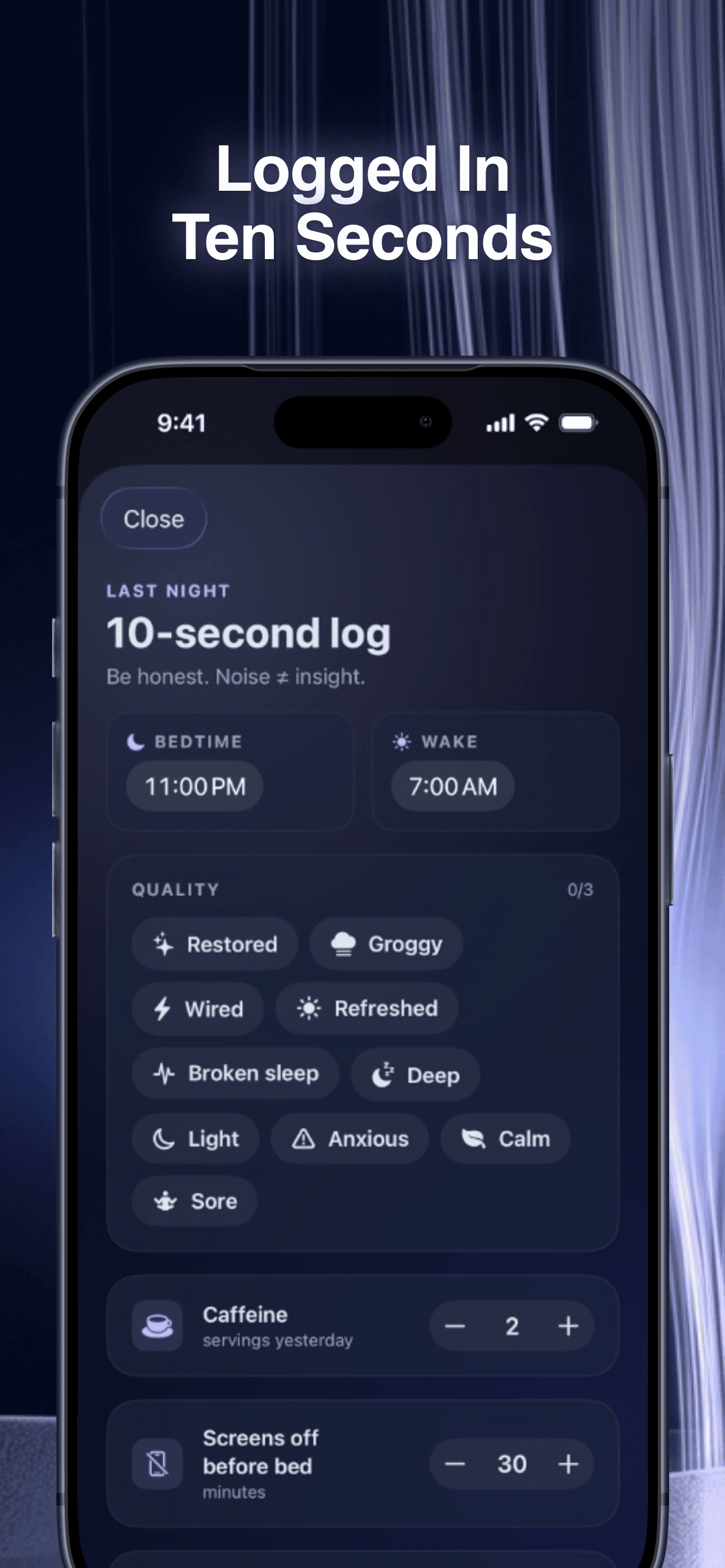
The Ten-Second Sleep Log That Actually Changes Behavior
Detailed sleep journals fail because nobody fills them out. Here's the minimum-viable nightly log that surfaces the patterns that matter — and what to leave out.