HRV and Sleep: What Your Heart Rate Variability Actually Tells You
Heart rate variability (HRV) measures your nervous system's recovery state. Higher HRV typically indicates better sleep readiness, while low HRV suggests you need more recovery time.
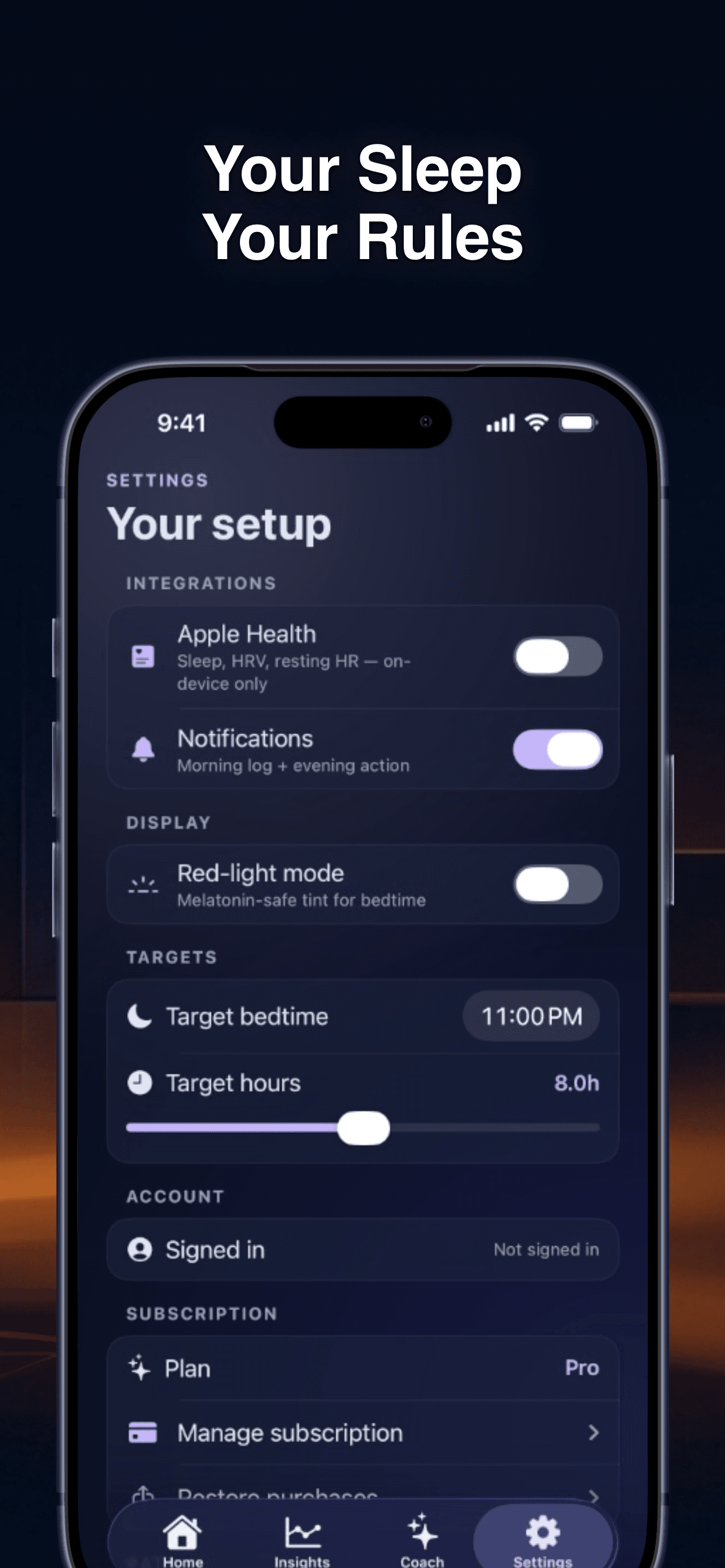
Photo by Sleep Arc.
Your Apple Watch tracks heart rate variability every night. But what does that jagged line of numbers actually mean for your sleep?
Heart rate variability (HRV) measures the tiny fluctuations in time between your heartbeats. Counter-intuitively, more variation is better. A higher HRV indicates your parasympathetic nervous system — your "rest and digest" mode — is functioning well. Lower HRV suggests your body is under stress, fighting illness, or hasn't recovered from yesterday's demands.
For sleep, HRV acts as a real-time readiness score. When your HRV is elevated, your body is primed for deep, restorative sleep. When it's suppressed, you're likely to experience lighter, more fragmented rest regardless of how many hours you spend in bed.
How HRV Changes Throughout Your Sleep Cycle
Your HRV isn't static during the night. It follows a predictable pattern that mirrors your sleep architecture.
During the first half of the night, when you spend more time in deep sleep, HRV typically peaks. This makes biological sense. Deep sleep is when your parasympathetic nervous system is most active, driving physical recovery and memory consolidation.
As you transition into REM-heavy sleep in the early morning hours, HRV often decreases. REM sleep activates your sympathetic nervous system — the same system that keeps you alert during the day. Your heart rate becomes more regular, reducing variability.
A healthy sleeper might see HRV values of 40-60 milliseconds during deep sleep phases, dropping to 20-30 milliseconds during REM periods. These numbers vary significantly between individuals, so focus on your personal trends rather than absolute values.
What Low HRV Actually Means for Your Sleep
Low HRV doesn't just predict poor sleep — it often explains why you feel unrested despite adequate sleep duration.
When your HRV is suppressed, your body struggles to shift into parasympathetic dominance. You might fall asleep normally but spend less time in the deeper stages that drive physical recovery. Sleep becomes lighter and more fragmented.
Common causes of low HRV include:
- Alcohol consumption within 4-6 hours of bedtime
- High caffeine intake, especially after 2 PM
- Intense exercise within 3 hours of sleep
- Elevated stress or anxiety
- Fighting off illness
- Poor sleep environment (too warm, too bright, too noisy)
I've noticed my own HRV drops by 15-20% on nights when I have a late dinner or check work emails before bed. The correlation is remarkably consistent.
Using HRV to Optimize Your Sleep Tonight
The most practical application of HRV is as a daily decision-making tool. Check your morning HRV reading to guide your evening routine.
When HRV is high (above your personal average):
- You can handle more intense evening activities
- A slightly later bedtime won't hurt recovery
- Your body is ready for deeper sleep phases
When HRV is low (below your personal average):
- Prioritize an earlier bedtime
- Avoid alcohol, caffeine, and screens before bed
- Consider gentle activities like reading or light stretching
- Keep your bedroom cooler than usual
This isn't about obsessing over daily fluctuations. HRV trends over weeks and months matter more than single-night readings. But when you see a clear dip, it's worth adjusting your evening routine accordingly.
The Apple Watch HRV Limitation You Should Know
Apple Watch HRV tracking has one significant blind spot: it only measures during sleep, not during waking hours.
Traditional HRV assessment involves a 5-minute morning reading while awake and relaxed. This captures your baseline recovery state without the confounding effects of sleep stages. Apple's sleep-only approach gives you valuable data, but it's incomplete.
For the most accurate picture, consider taking a manual HRV reading when you wake up, before getting out of bed. Several apps can do this using your phone's camera or a chest strap monitor. Compare this to your Apple Watch sleep HRV to understand both your sleep quality and your readiness for the day ahead.
How Sleep Arc Uses Your HRV Data
Sleep Arc integrates with Apple Health to pull your HRV readings alongside sleep duration, heart rate, and respiratory rate. The AI coach analyzes these patterns to deliver personalized recommendations.
Instead of generic advice like "get 8 hours of sleep," Sleep Arc might suggest specific actions based on your HRV trend: "Your HRV has been low for three nights. Try dimming lights 90 minutes before bed and avoid screens after 9 PM."
The app's strength is connecting your physiological data to actionable changes. When your HRV improves after following a recommendation, Sleep Arc reinforces that behavior. When it doesn't, the coach adjusts the approach.
This personalized feedback loop is what makes HRV tracking useful rather than just interesting. Your heart rate variability becomes a guide for better sleep decisions, not just another number to track.
The key insight: HRV isn't about hitting a target number. It's about understanding your body's recovery state and adjusting your evening routine accordingly. When you align your sleep habits with your physiological readiness, both your HRV and your sleep quality improve together.
Frequently asked questions
- What is a good HRV score for sleep?
- HRV varies significantly between individuals. Focus on your personal trends rather than absolute numbers. Most healthy adults see HRV values of 20-60 milliseconds during sleep, with higher values during deep sleep phases and lower values during REM sleep.
- Can I improve my HRV naturally?
- Yes. Regular exercise, consistent sleep schedule, stress management, limiting alcohol, and maintaining a cool sleep environment typically improve HRV over time. Changes usually become apparent after 2-4 weeks of consistent habits.
- Why is my Apple Watch HRV different from other devices?
- Apple Watch measures HRV only during sleep, while other devices often measure during waking hours. Sleep HRV is influenced by sleep stages, making it different from resting waking HRV. Both metrics are valuable but measure different aspects of recovery.
- Should I worry about daily HRV fluctuations?
- No. Daily HRV can vary by 20-30% due to factors like stress, exercise, diet, and sleep quality. Focus on weekly trends rather than single-night readings. Consistent patterns over 7-14 days are more meaningful than daily changes.